Five Families War
The GodfatherThe Five Families War is the central armed and institutional conflict of the novel’s New York underworld. It begins after the murder of Virgil Sollozzo and Captain McCluskey, when the Corleone Family refuses to surrender Michael Corleone, and it expands from a single act of violence into a contest over gambling, labor influence, political protection, territory, and the authority to define justice. The war exposes both the reach and the limits of the Corleone system: its networks can protect businesses and organize retaliation, but prolonged conflict drains its income, reveals weaknesses in its aging leadership, and ultimately produces a stalemate that only a political settlement can end.
Causes and Background
The immediate trigger is the murder of Virgil Sollozzo and Captain McCluskey. On the following day, police captains and lieutenants throughout New York City order a complete suspension of illegal activity until the killer is found. Gambling, prostitution, and every other deal are halted, while massive raids bring the city’s unlawful businesses to a standstill. The police response turns the murder into a collective crisis: the Five Families can no longer treat it as an isolated dispute because the state’s pressure threatens every family’s revenue and operating structure.
The Families then ask whether the Corleone Family will surrender the murderer. The answer is that the affair does not concern them. The refusal immediately produces retaliation. A bomb is thrown from a car at the Corleone Family mall in Long Beach, and two Corleone button men are killed while eating dinner in a small Italian restaurant in Greenwich Village. The conflict is therefore declared not through a formal proclamation but through a sequence of pressure, refusal, and reprisal. What began as the defense of Michael becomes the Five Families War of 1946, later described as the war of 1947 between the Corleone Family and the Five Families combined against it.
The war grows out of a larger disagreement about competing systems of justice. Amerigo Bonasera had first trusted American law and order after two young men beat his daughter. The boys were arrested, pleaded guilty, and faced overwhelming evidence, but the judge suspended their three-year sentence and released them that day. Bonasera then turned to Don Vito Corleone, asking for justice after concluding that the courts had made fools of him. Don Vito’s alternative is personal allegiance: he argues that a supplicant who comes to him as a friend receives protection that courts, banks, and official institutions will not provide. The same principle governs the wartime conflict. The Families treat loyalty, protection, and retaliation as a parallel political order, while the police respond with the state’s coercive power.
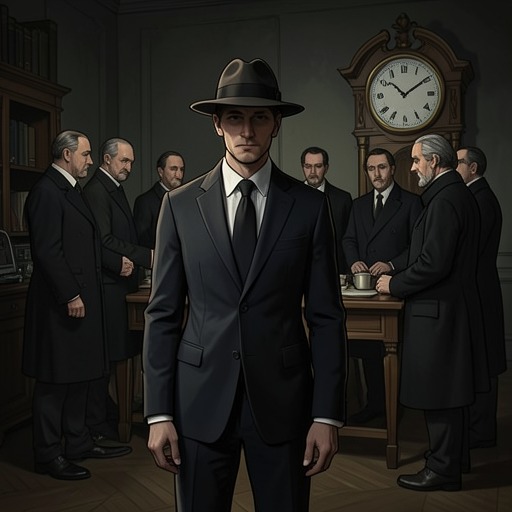
That alternative order had been built over decades. Don Vito Corleone helped poor Italian residents find work, obtain relief, borrow money, escape jail, and resist landlords. Their gratitude became political influence: people sought his advice about candidates for city, state, and congressional office, and he cultivated future lawyers, assistant district attorneys, and judges by helping talented boys from poor Italian families attend college. His organization also developed a formal structure. Genco Abbandando served as Consigliere, while Peter Clemenza and Salvatore Tessio became Caporegimes commanding soldiers. Layers of insulation separated Don Vito from operational acts, allowing orders to move through a chain without revealing their origin. The war tests this carefully designed system by forcing it to function under direct police surveillance and military pressure.
Before the war, Don Vito had also worked to prevent precisely this kind of disorder. By 1939 he had traveled and conferred with underworld leaders in Los Angeles, San Francisco, Cleveland, Chicago, Philadelphia, Miami, and Boston, building a working agreement among powerful organizations. The agreement preserved each group’s internal authority and established spheres of influence and peace. The war represents the collapse of that broader settlement. The same man who had become an apostle of peace within the underworld must now defend his family against the combined power of the organizations whose cooperation he once secured.
Course of the War
The conflict is costly from the beginning. Police pressure makes ordinary operations dangerous, particularly the Corleone Family’s numbers and policy business. Runners are caught in police nets, beaten before being booked, and deprived of the protection that normally allows the gambling network to function. Some numbers banks are discovered and raided, producing heavy financial losses. The bankers complain to the Caporegimes and then to the family council, but the council can offer no rescue. The bankers are ordered out of business, while local Black freelancers take over Harlem’s richest territory because their scattered operations are harder for police to suppress.
The Corleone Family uses information as another weapon. After McCluskey’s death, newspapers publish reports connecting him with Sollozzo and documenting that McCluskey had received large sums of cash shortly before his death. Tom Hagen supplies the information and arranges for the stories to be planted. The Police Department neither confirms nor denies the reports, but the rumors move through informers and police officers on the Family payroll. McCluskey is recast inside the force not merely as a corrupt officer who accepted ordinary graft but as a rogue policeman who took money connected with murder and drugs. That distinction matters within police culture: the dirtiest money becomes the charge that discredits the dead captain and weakens the political and institutional pressure against the Corleone Family.
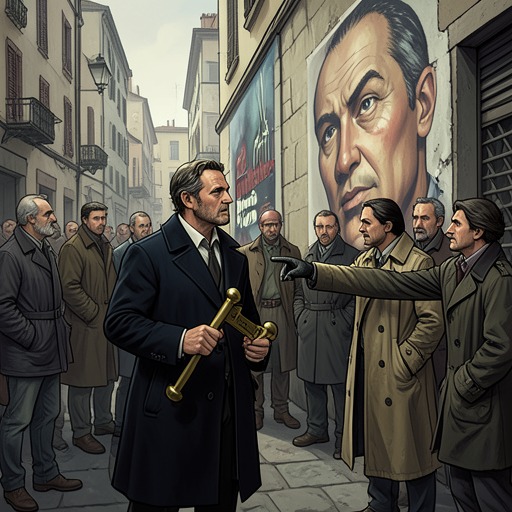
The Five Families then attack the Corleone position through labor and commerce rather than relying only on gunmen. Two powerful garment-union officials who belong to the Corleone Family are killed. Corleone shylocks and bookmakers are barred from the waterfront piers, and the longshoremen’s union locals transfer their allegiance to the Five Families. Bookmakers across the city are threatened and pressured to change sides. In Harlem, the largest numbers banker, an old friend and ally of the Corleone Family, is brutally murdered. The combined assault strips away income, access, and loyalty until armed resistance becomes unavoidable.
Santino Corleone responds by ordering the Family to go to the mattresses. Two apartments are established in the city as wartime positions. Each is furnished with mattresses for button men, a refrigerator for food, and guns and ammunition; Peter Clemenza staffs one apartment and Salvatore Tessio the other. Corleone bookmakers receive bodyguard teams. The arrangements turn domestic rooms into military installations and make the family’s hidden infrastructure visible as a system of fortified, supplied, and rotating personnel. Yet the mobilization costs a great deal of money while very little revenue is coming in, so every defensive measure also deepens the economic crisis.
Santino considers a more decisive counterattack. He plans to execute the heads of the five Families in one coordinated maneuver and establishes an elaborate surveillance system to locate them. The plan fails to produce an opening: after a week, the enemy chiefs disappear underground and are no longer seen in public. The attempt reveals the logic of the war. Neither side can easily destroy the other’s leadership, because the same networks that make organized violence possible also provide concealment. The result is not victory but stalemate.
Leadership and Organizational Strain
The Corleone Family enters the war with serious internal weaknesses. Don Vito remains too weak to participate fully, and his absence neutralizes much of the political strength that had protected the organization in peacetime. The ten years of peace have also eroded the fighting capacity of the senior Caporegimes. Clemenza remains a competent executioner and administrator, but he no longer possesses the energy or youthful strength required to lead troops. Tessio has mellowed with age and is no longer ruthless enough for the demands of total war.
Tom Hagen’s position exposes a different kind of weakness. Although he is intelligent, powerful, and deeply trusted by Don Vito, he is not considered suited to be Consigliere in wartime because he is not Sicilian. The traditional office depends upon blood, familiarity with Omertà, and the belief that a Sicilian-born counselor can be trusted with the family’s most dangerous knowledge. Hagen’s appointment had already broken that tradition, even though his upbringing within the Corleone household had made him effectively a member of the Family. In wartime, the old rule becomes a practical criticism: Hagen’s abilities do not erase the organization’s anxiety about legitimacy, loyalty, and inherited forms of authority.
Santino recognizes these weaknesses but cannot simply correct them. He is not the Don, and only Don Vito can replace the Caporegimes or the Consigliere. Replacing senior officers during an active war could itself provoke treachery. Santino therefore begins by imagining a holding action until his father recovers, but the loss of the policy bankers and the terrorization of bookmakers make delay increasingly dangerous. His decision to attack the enemy leadership is both a tactical choice and a consequence of institutional paralysis: because he cannot reform the command structure, he tries to compensate through a single overwhelming strike.
The Family’s command system is designed to conceal responsibility. Don Vito’s orders normally pass privately through Hagen, then through Clemenza or another intermediary, and finally to an operating soldier who may know neither the original purpose of the task nor the identity of the person who ordered it. This structure protects the head of the organization, but war magnifies its disadvantages. Communication slows, information becomes fragmented, and every layer can become a point of failure. The war thus turns the Family’s greatest peacetime protection into a source of delay and uncertainty.
Settlement and Aftermath
The stalemate creates the conditions for negotiation. Don Vito eventually regains his strength and attends the council, where he rejects renewed vengeance for the death of Santino Corleone. He declares that he will not seek revenge or investigate the deeds of the past, and he promises that, while he remains responsible for the actions of his Family, no one at the council will be attacked without just cause and the utmost provocation. His renunciation is not simple forgiveness. It is a political sacrifice: he is willing to give up commercial interests for the common good because continued violence threatens every organization represented there.
Don Vito frames the settlement as a defense of collective autonomy. He argues that the Families must manage their own affairs rather than allow powerful outsiders to decide which wars they must fight or which laws they must obey when those laws serve external interests. His conception of Cosa nostra is therefore both a criminal compact and a political doctrine: internal unity protects the community from outside interference. The language of reason and self-government gives the peace a moral surface, but the agreement remains grounded in the power to enforce boundaries and punish violations.
The settlement also contains a personal demand. Don Vito’s youngest son, Michael Corleone, has fled after being accused of murdering Sollozzo and a police captain. Don Vito insists that bringing Michael home safely is his own affair. He may have to find the real culprits, persuade authorities that Michael is innocent, or cause witnesses and informants to recant their lies, but he believes the Family can accomplish it. The war’s public settlement therefore carries a private objective: peace is the price and the mechanism for arranging Michael’s eventual return.
The consequences extend beyond the battlefield. The war demonstrates that the Corleone Family’s power depends on more than armed men. It rests on political contacts, labor alliances, police relationships, economic reserves, disciplined communication, and the ability to make favors feel like friendship. When those supports are attacked simultaneously, violence alone cannot restore the organization. The conflict’s ending points toward a transition from open warfare to more calculated forms of power, in which commercial interests, political influence, and institutional legitimacy may become more valuable than constant gunfire.
Narrative Significance
The Five Families War marks the moment when the novel’s competing ideas of justice become impossible to keep separate. The courts fail Bonasera; the police protect public authority while operating through corruption and repression; the Families offer protection through allegiance and revenge. Each system claims order, yet each depends on coercion, selective loyalty, or concealed transactions. The war is consequently not only a gang conflict but a struggle between overlapping legal and political orders.
It also reveals the paradox of Don Vito’s rule. He believes he runs his world better than the larger world that obstructs him, and his assistance to the poor gives that belief a social foundation. But the same protective system requires silence, debt, hidden chains of command, and the threat that enemies will be made to fear anyone who comes under his protection. The war turns benevolent patronage into territorial confrontation and shows that a government built on personal favors must continually defend the obligations that sustain it.
Finally, the war prepares the succession crisis that will define the next stage of the story. Don Vito’s recovery restores strategic intelligence, but the conflict has exposed the limits of the older leadership and the vulnerability of a family empire dependent on one man’s authority. Michael’s exile, arranged through Hagen’s false passport, seaman’s card, and passage on an Italian freighter, becomes one of the war’s decisive consequences. The struggle ends in stalemate rather than resolution, but its pressures have already begun to move the Corleone Family toward a new order in which the future will depend less on Don Vito’s personal network than on Michael’s capacity to transform survival into control.